Swimming Pool Accidents & Drowning Statistics (2026): What Florida Families Should Know
About Safety Fence
October 24, 2026
What should Florida parents know about pool drowning in 2026? The newest federal pool-and-spa report shows that young children and residential settings remain central to prevention. The practical response is a safety plan that works during swimming time and when nobody intends to swim.
This guide separates national child pool statistics from Florida’s broader drowning figures, explains the evidence for isolation fencing, and turns the research into steps families can use at home. Reviewed October 24, 2026. A report’s publication year is not necessarily the year in which the incidents occurred.
The Latest U.S. Pool Drowning Statistics
The CPSC’s June 24, 2026 release provides these national figures. Each applies to children younger than 15 and to pool- or spa-related drowning, not every type of swimming injury.
2026 CPSC report: U.S. children younger than 15| Finding | Population and period |
|---|
| 376 deaths per year | Annual average of reported fatal pool/spa drownings, 2021–2023. |
|---|
| 5,900 nonfatal injuries per year | Estimated annual average of pool/spa nonfatal drowning injuries treated in hospital emergency departments, 2023–2025. |
|---|
| Nearly 80% were under five | Share of fatal child pool/spa drowning victims, 2021–2023. |
|---|
| More than 70% were residential | Share of fatal child pool/spa drownings in home settings, 2021–2023. |
|---|
These are different measures: the emergency-department estimate is not a count of deaths, and the reporting periods differ. They should not be added together or presented as incidents that all happened in 2026. Searches for “swimming pool accidents statistics” also include falls and other injuries; the figures above specifically describe drowning.
Why Children Under Five Face the Greatest Risk
The CDC identifies drowning as the leading cause of death among U.S. children ages 1–4. Its risk-factor guidance explains that most drownings in this age group occur in swimming pools and that unexpected access is a major concern.
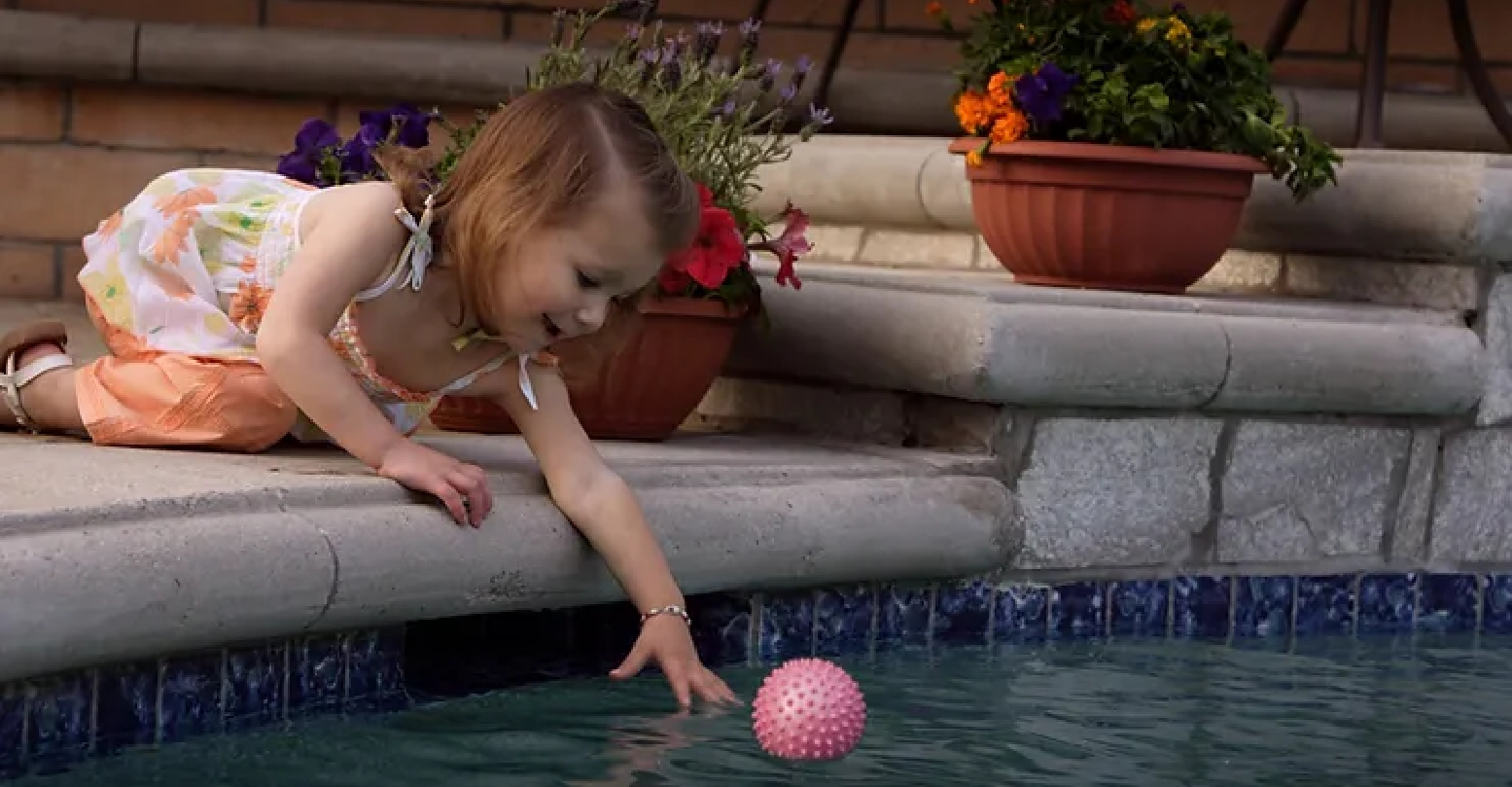
A child does not need a planned swim to encounter danger. A door left open while groceries come inside, an unsecured gate, or an unnoticed route around a barrier can create access. Treat those everyday transitions as part of the household safety plan, rather than relying on reminders to stay away from the water.
Where and When Most Pool Drownings Occur
The CPSC residential category includes the child’s own home and homes of relatives, friends, acquaintances or neighbors. Its national data also show the highest fatal drowning counts in June, July and August. A familiar address or a gathering of adults should never be treated as a substitute for a specific supervision arrangement.
Before a visit, ask how the pool is separated from living and play areas. During a party, name the adult who is watching the children and make each handoff explicit. After swimming, check that gates and access doors are secured again. These steps address changes in routine that a general “watch the kids” instruction can miss.
Florida Pool Drowning Risks: Why Safety Matters Year-Round
The Florida Department of Health reports more than 500 unintentional drowning deaths in 2023. That statewide total includes all ages and different bodies of water. It is not a count of children who died in backyard pools, and it is not directly comparable to the CPSC child pool-and-spa figures.
For Miami-Dade, Broward, Palm Beach and Monroe County families, a practical approach is to keep protection in place whenever the pool is accessible, including outside summer. A calendar change does not secure an open gate. At a Florida Keys vacation property, review the pool route as well as any separate access to a dock or canal.
This article does not assign national percentages to individual South Florida counties. County comparisons require a consistent source, age group, incident definition and period. For local figures, use the Florida CHARTS resources linked by the health department rather than assuming a national rate describes your neighborhood.
How Proper Pool Fencing Helps Reduce Drowning Risks
CDC summarizes research showing an 83% lower child drowning risk with four-sided isolation fencing compared with three-sided property-line fencing. The comparison matters: it is not an 83% guarantee for every fence, property or child. It does not establish that a particular brand or removable product delivers that exact result.
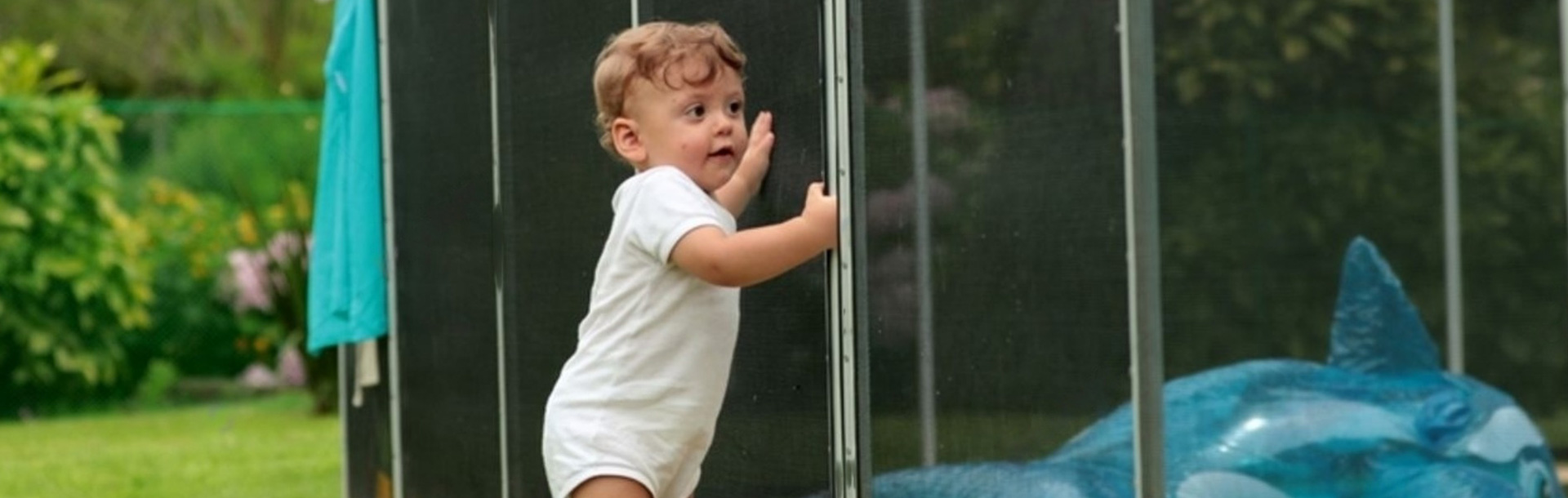
Isolation fencing separates the water from both the home and the remaining yard. A boundary fence can enclose a property while leaving a direct path from a back door to the pool. When assessing a layout, trace that path from a child’s perspective: which door, opening or removable section could provide access?
Our removable pool fence information explains the product option. Its protective role depends on appropriate installation, maintenance and keeping the barrier secured. A removed section cannot protect the opening it leaves.
The Importance of Four-Sided Fences and Self-Closing Gates
The AAP’s home pool guidance recommends a fence at least four feet high that completely separates the pool, with a gate that closes and latches automatically and opens away from the water. Keep furniture and other climbing aids away from the barrier.
Test the gate instead of assuming it still works. Check closing and latching from different open positions, and arrange repair if it catches, sags or needs a push. Never prop it open for convenience. See our self-closing pool gate information for installation details.
These are prevention recommendations, not a determination of your property’s legal requirements. A compliant design must be confirmed for the project and jurisdiction; a general article cannot promise inspection approval.
Pool Fences, Safety Nets, Alarms and Multiple Layers of Protection
The AAP’s updated 2026 recommendations reinforce combining capable adult supervision, water skills, barriers, suitable life jackets and emergency preparation. Its accompanying policy statement and technical report support a layered approach rather than a single-device solution.
Consider how each option fits daily use. A fence can separate the pool while it remains installed. A pool safety net must be correctly fitted and secured when used; it must be completely removed before swimming and provides no net barrier while removed. A partial net used to discourage wildlife is not a complete child-safety barrier.
Alarms can add an alert but do not physically block entry. Ordinary floating or solar covers are not safety covers. Choose equipment for its intended purpose, follow its instructions, and have the layout evaluated. None of these measures replaces an attentive adult.
Practical Pool Safety Checklist for Florida Homeowners
Use this walkthrough with every adult who cares for your child:
- Before guests arrive: inspect the complete barrier route, gate latch and access doors; explain how each is secured.
- Before swimming: assign a water watcher who avoids phone use and alcohol. Agree on who takes over before that person leaves.
- For toddlers and weak swimmers: provide an adult within arm’s reach, following the AAP’s touch-supervision guidance.
- After swimming: remove tempting toys, restore any removed protection and check the gate rather than leaving it open for the next swim.
- For lessons: discuss readiness with your pediatrician and choose qualified instruction. The AAP says many children can begin after age one; lessons do not remove the need for supervision.
- For emergencies: learn CPR and safe rescue, keep a phone accessible for calling 911, and make the property address easy for visitors to find.
- If a child is missing: check the pool immediately. In an emergency, call 911 and follow the dispatcher’s instructions.
The CDC prevention guide and AAP swim-lesson guidance explain these complementary steps. Our Stay Safe by the Pool article provides an everyday family-safety companion to this statistics guide.
Frequently Asked Questions
Are these the number of drownings that happened in 2026?
No. The 2026 CPSC publication uses fatal incident data from 2021–2023 and estimated emergency-department-treated nonfatal drowning injuries from 2023–2025. The report year and incident years must remain separate.
Is a yard fence enough to isolate a swimming pool?
Not necessarily. If a child can walk from the house directly into the pool area, the water is not isolated from the home. Evaluate the entire access route, not just the property boundary.
Do swim lessons replace a pool barrier?
No. Swimming ability and barriers address different parts of prevention. Children who have lessons still need close supervision and protection from unexpected access when swimming is not planned.
Can a safety net replace every other precaution?
No. A net’s protection depends on correct use and full intended coverage. It does not replace supervision, water skills, emergency readiness or project-specific compliance review.
Where can I ask about my South Florida pool layout?
Start with our installation FAQs or contact About Safety for a property-specific discussion. Use Create My Quote for a preliminary fence estimate; it does not certify a safety design.
Official Sources and Additional Resources
About Safety Pool Fence & Nets has served South Florida since 1999. For help evaluating fence, net or gate options in Miami-Dade, Broward, Palm Beach or the Florida Keys, request installation guidance. No initial deposit is required. Safety planning starts with the property and the people using it—not a promise that any product removes every risk.