Quick answer: A pool fence on pavers can often be installed safely, but the condition of the deck and the material beneath the pavers determine how the fence—and especially the gate—should be supported. Regular fence sections are installed with core-drilled sleeves. A self-closing gate needs a rigid foundation, so pavers installed over sand may require concrete footers around the gate posts to keep the gate aligned and closing correctly.
After installing removable pool barriers throughout South Florida since 1999, we have seen that the gate area is where proper deck preparation matters most. A fence may look straight on installation day, but a gate supported only by loose or shifting pavers can eventually sag, drag, or stop latching.
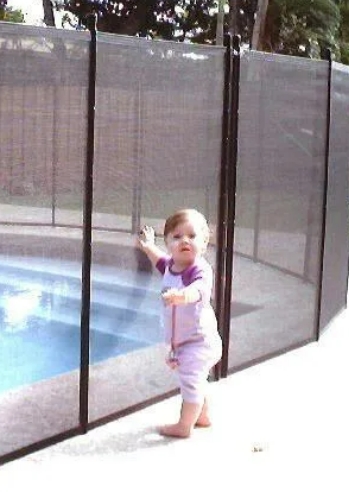
Removable pool fence installed on a paver deck in South Florida.
Can a Pool Fence on Pavers Be Installed Safely?
Yes. In many homes, a removable mesh pool fence can be installed on a paver deck. Before drilling, the installer should evaluate:
Whether the pavers are set over sand or over a concrete slab
The thickness and condition of the pavers
Cracks, loose sections, joints, drainage channels, and coping
The proposed fence line and its distance from the water and climbable objects
The location and opening direction of the gate
This inspection helps determine where holes can be drilled safely and whether additional structural support is necessary.
How a Professional Installation Works
A removable pool fence should not depend on surface-mounted plastic bases or screws driven only into the top of a paver. Our installation process uses core-drilled holes and fitted sleeves so the fence posts seat securely below the deck surface.
Plan the layout. The fence line is measured around the pool while allowing practical walking space and avoiding obstacles.
Mark every post location. Spacing and angles are checked before drilling begins.
Core-drill the deck. Each opening is drilled with equipment appropriate for the deck material.
Install sleeves. Sleeves protect the drilled openings and receive the removable fence posts.
Tension and align the fence. The mesh is kept taut and each section is checked for a consistent, secure fit.
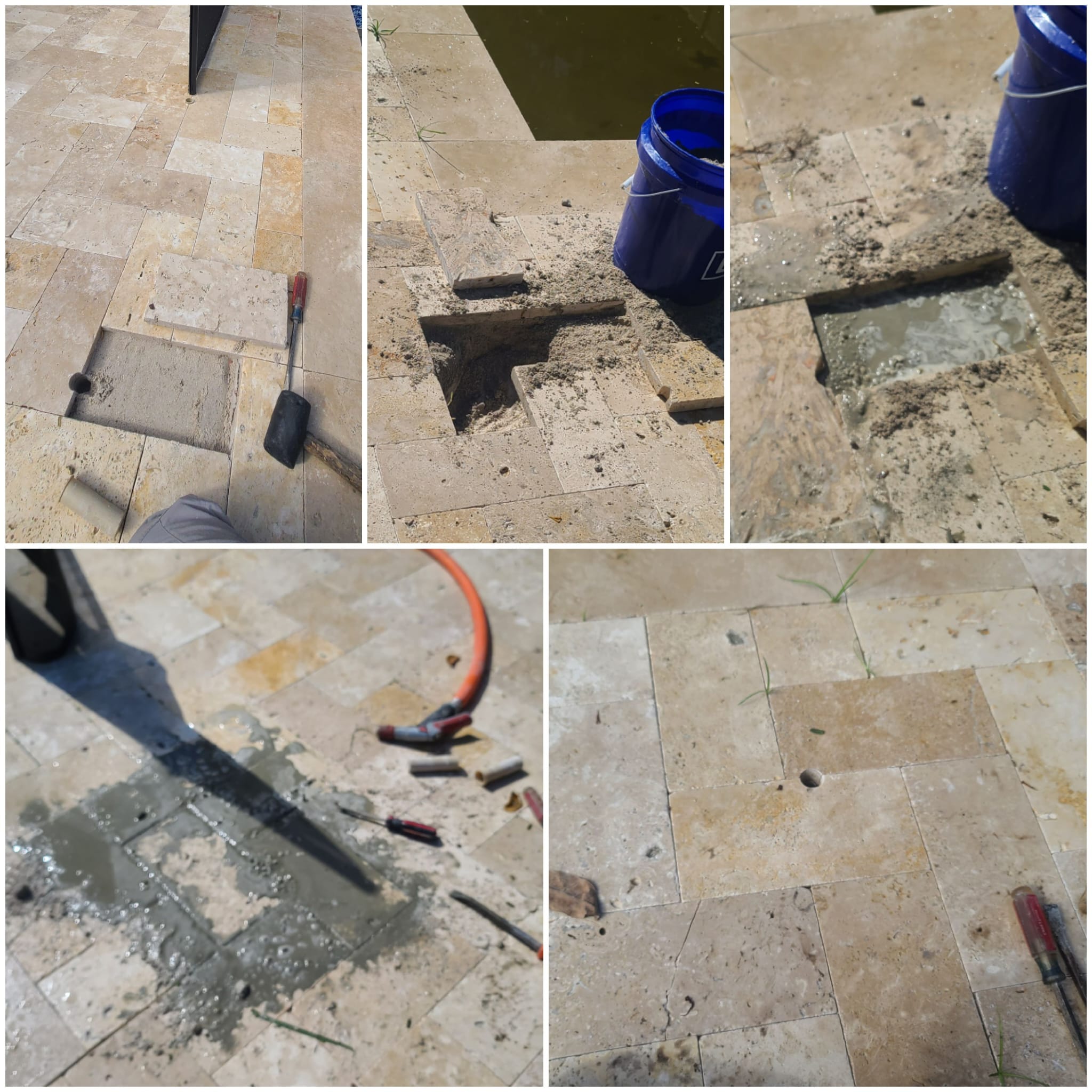
Prepare the gate foundation. If the pavers are set over sand or the base is not stable enough, concrete footers may be added in the gate area.
A gate places more stress on the deck than a regular fence panel. Its weight moves repeatedly every time the gate opens and closes. The hinges also apply leverage to the supporting posts. If those posts are installed through pavers that can shift in sand, the gate may slowly move out of alignment.
Possible warning signs include:
The gate no longer swings closed by itself
The latch and striker no longer line up
The bottom of the gate begins to drag
The supporting posts lean or move
The gate must be lifted by hand to latch
A properly installed pool fence on pavers depends on a stable gate foundation. Concrete footers create a stable base below the pavers and help the gate remain aligned. They are not automatically needed for every fence installation, but they can be essential when the gate area does not have a solid concrete foundation.
Gate Frame Quality Also Matters
Our self-closing gate uses a strong welded 2-by-1-inch aluminum frame, double square support posts, and powder-coated components. The rectangular welded frame is designed to resist flexing and help prevent the lower section from being pushed out of position. This is different from lightweight gates made with thin round fence tubing or frames joined mainly with plastic connectors and screws.
Florida law requires residential pool barriers to be at least four feet high and designed without gaps or components that would allow a young child to crawl under, squeeze through, or climb over the barrier. Gates providing pool access must open outward, away from the pool, and must be self-closing and self-latching.
These are statewide requirements, but local permitting and inspection rules can vary. Homeowners should confirm the requirements that apply to their property. The current requirements are available in Florida Statute 515.29.
Questions to Ask Before Hiring a Pool Fence Installer
Will the posts be installed in core-drilled sleeves or surface-mounted bases?
Is my deck a concrete slab, or are the pavers installed over sand?
Does the gate area need concrete footers?
Is the gate frame welded and rigid, or assembled from flexible tubing and connectors?
Will the gate self-close and self-latch from different open positions?
Are the fence layout, gate, footers, and any travel charges clearly listed in the quote?
Frequently Asked Questions
Does every pool fence installed on pavers need concrete footers?
No. Many regular fence sections can be installed with properly fitted sleeves. Footers are most commonly considered in the gate area or wherever the base beneath the pavers cannot provide stable support.
Can a self-closing gate be installed directly on sand-set pavers?
The gate should not rely on loose pavers alone. If there is no solid slab beneath the gate posts, concrete footers may be needed to reduce movement and maintain alignment.
Will drilling permanently damage the paver deck?
Professional core drilling creates controlled openings for the sleeves. The installer should inspect the pavers first and avoid weak edges, existing cracks, and unsuitable locations.
Can the fence still be removed?
Yes. The fence sections can be removed when needed. The sleeves remain in the deck and can be capped so the surface stays neat when the fence is not in place.
Request a Pool Fence Evaluation
About Safety Pool Fence & Nets serves Miami-Dade, Broward, Palm Beach, and Monroe County. Send us photos of the pool, the proposed fence line, and a close view of the deck so we can evaluate the installation area.