Raccoons in Your Pool? Nets, Fences & Shallow-Area Protection
About Safety Fence
October 23, 2026
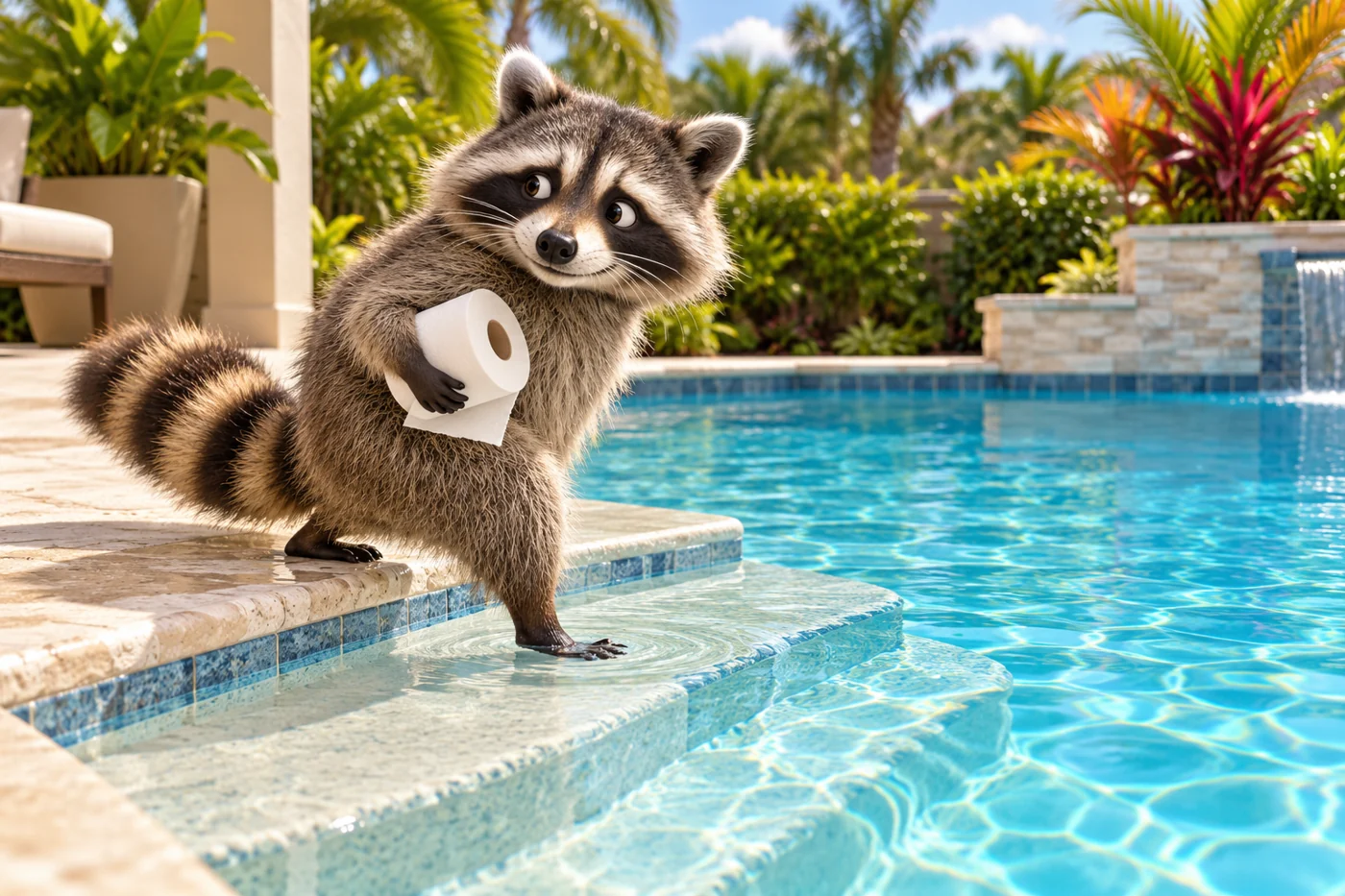
Raccoons in your pool? Your shallow steps may look like a convenient bathroom to an uninvited visitor. A custom raccoon pool net can help discourage access to that favorite spot, while a well-planned pool fence can help limit the routes animals use to reach the water.
At About Safety Pool Fence & Nets, we assess the pool layout before recommending partial net coverage, a fence across an access route, or a barrier around the entire pool. Here is what homeowners in Miami and South Florida should know.
Why do raccoons use the shallow end of a pool?
According to the CDC, raccoons often return to the same place to defecate, and in swimming pools they usually use shallow areas such as steps. That is why the location of a barrier matters: the entry steps, tanning shelf or shallow ledge may be the area that needs attention.
Why is raccoon poop in pool water a concern?
Raccoon feces can contain eggs of Baylisascaris procyonis, a parasitic roundworm. This is a parasite, rather than a bacterium. Swallowing its eggs can cause infection and, in severe cases, damage to the nervous system or eyes. The CDC notes that chlorine does not kill these eggs. Human infections are rare, and the CDC reports no known human cases linked to swimming pools.
If you find raccoon feces in the water, close the pool to swimmers and follow the CDC guidance for raccoons in and around pools, with help from your pool service or local animal control. A barrier does not clean water that is already contaminated.
A raccoon net over the shallow area
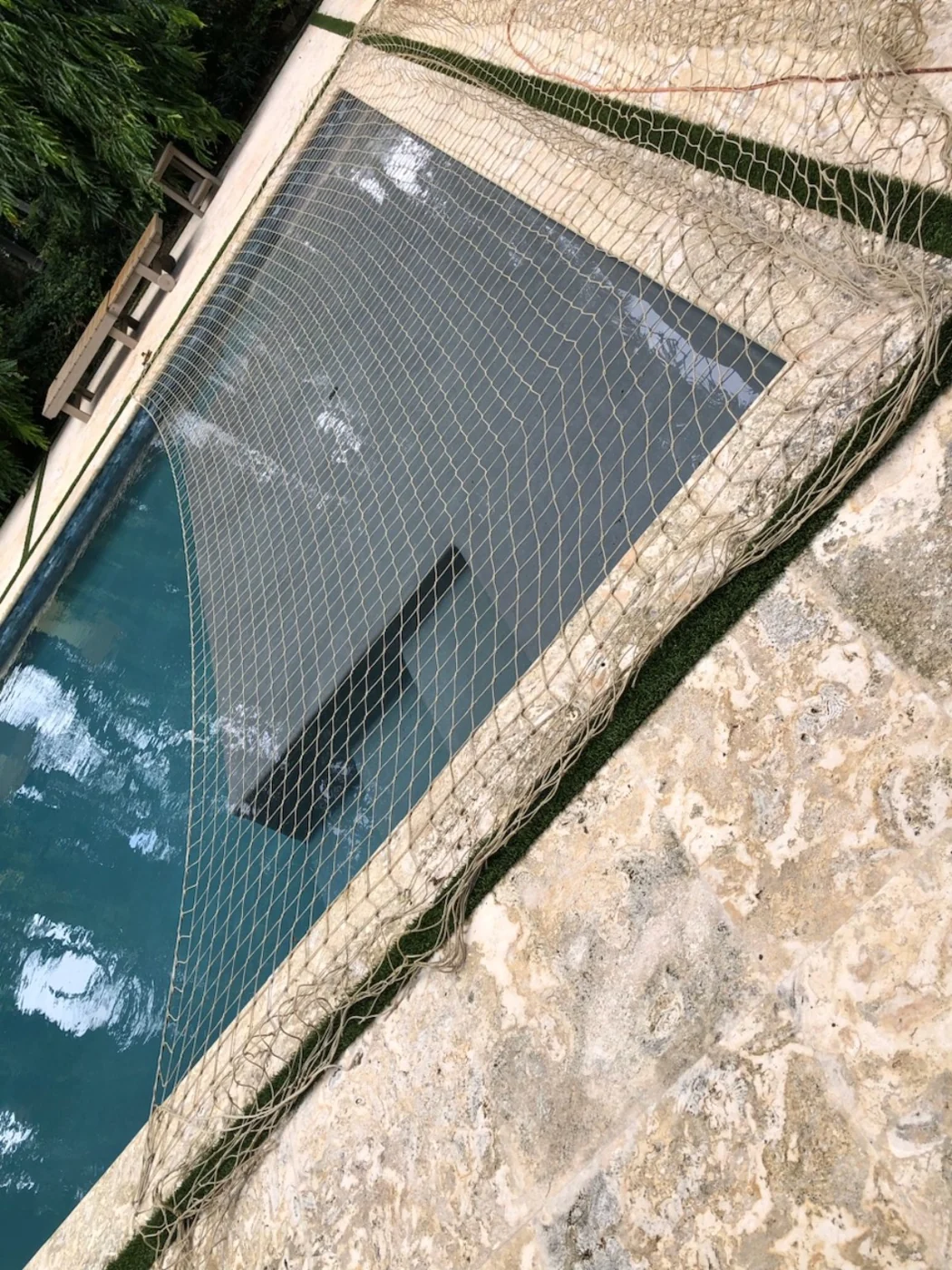
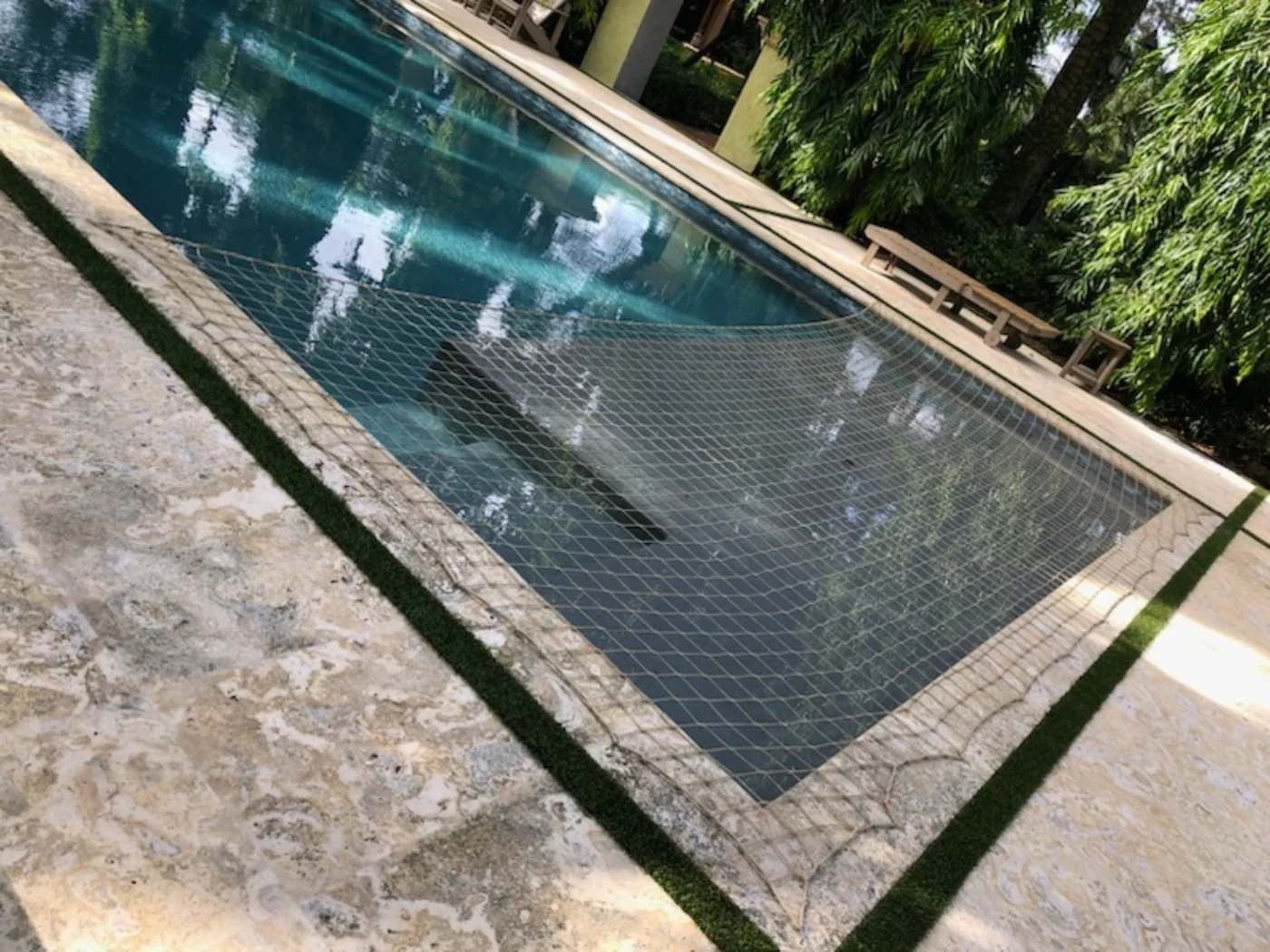
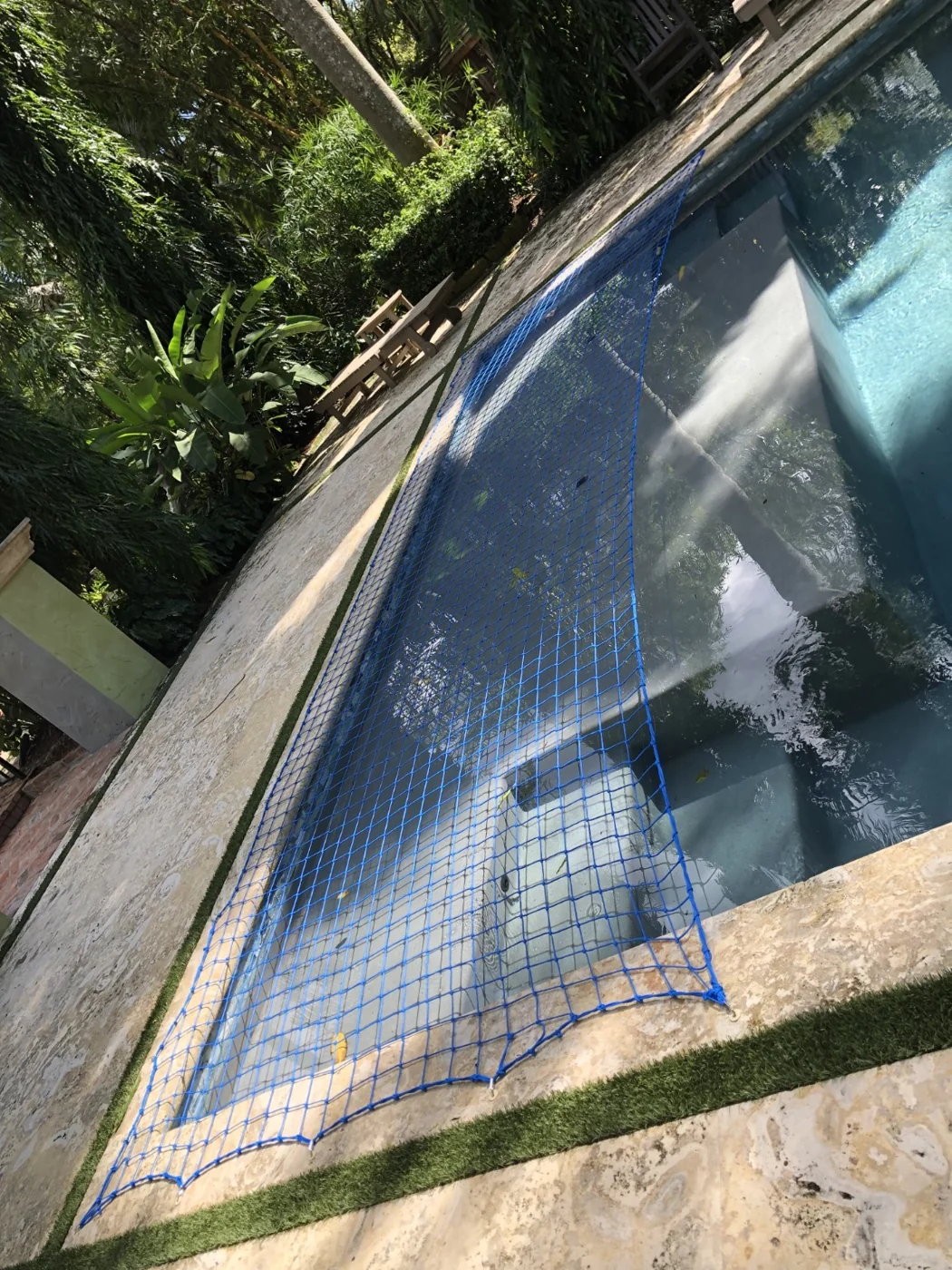
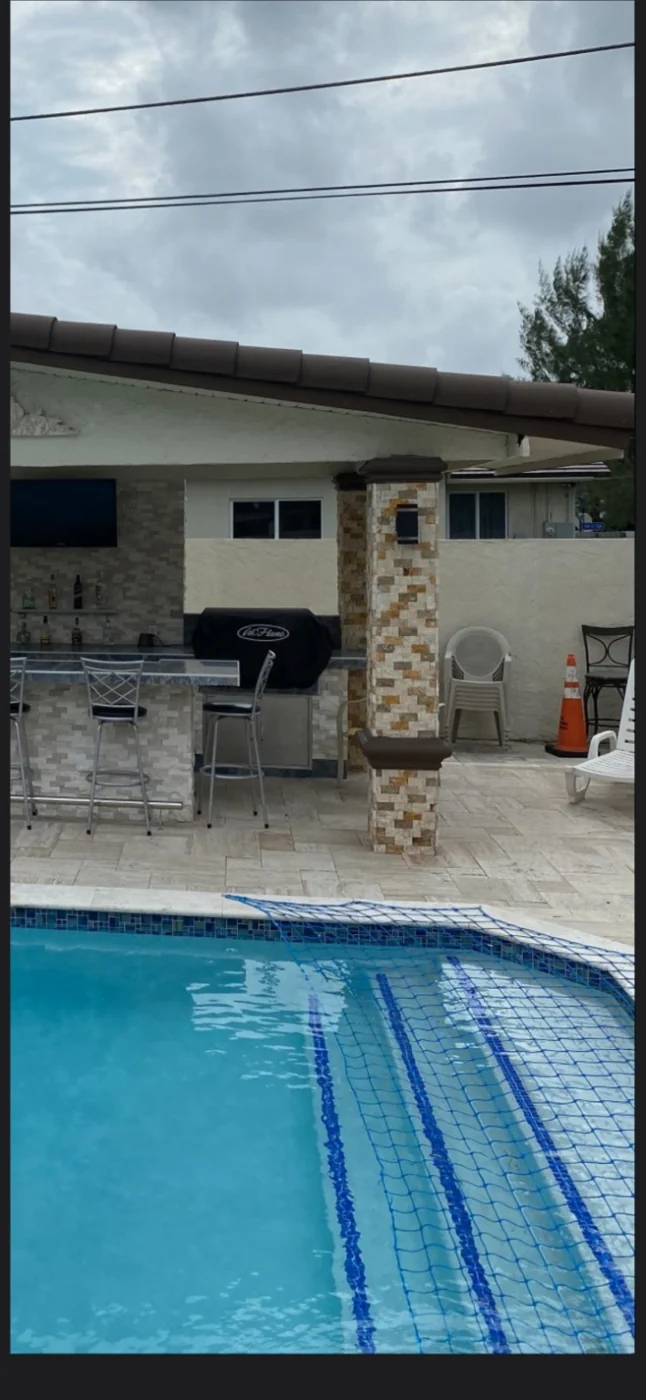
A custom-fitted net can be positioned over the shallow shelf or entry steps to discourage raccoons from reaching and using that spot. The examples below show partial coverage of the shallow area only, with the remaining water left open. The CDC recommends covering the pool area visited by raccoons; the appropriate net layout still depends on your pool and the animal's access routes.
These are practical deterrent installations, not a guarantee that wildlife cannot enter the pool. The net must remain properly secured and should be inspected for gaps or damage.
Raccoon net — shallow area onlyRaccoon net — shallow area onlyRaccoon net — shallow area only
Blue raccoon net over the pool entry steps — shallow-area coverage only.
Child-safety distinction: a partial wildlife net is not a complete child-safety barrier. If you need protection for children, ask us about a complete pool safety net or an appropriate pool fence system.
Can a partial or full pool fence help?
A partial fence may help when it closes a specific route and connects to suitable existing structures. A fence around the entire pool provides a more continuous barrier. Placement, openings, gates and the surrounding landscaping all affect the result.
Raccoons are capable climbers, so a removable pool fence should not be described as raccoon-proof. We can review your layout and discuss whether a net, fencing or a combination makes sense. Explore our removable pool fence options and custom pool net installations.
What about iguanas and frogs?
A pool fence may also help limit ground-level access by iguanas and some frogs, depending on their size and the barrier layout. It is not a guaranteed wildlife-exclusion system: iguanas can climb, and frogs may jump or pass through openings. Tell us which animals are visiting so we can assess the gaps, nearby vegetation and entry points instead of promising a one-size-fits-all fix.
Request a raccoon pool net estimate in South Florida
Send us a photo of the pool, the shallow area and the route the animals use. Let us know whether you need wildlife deterrence, child safety or both. About Safety has experience dating back to 1999 serving homeowners throughout Miami-Dade, Broward, Palm Beach and the Florida Keys.